Wood stain for kitchen cabinets
What is wood stain?
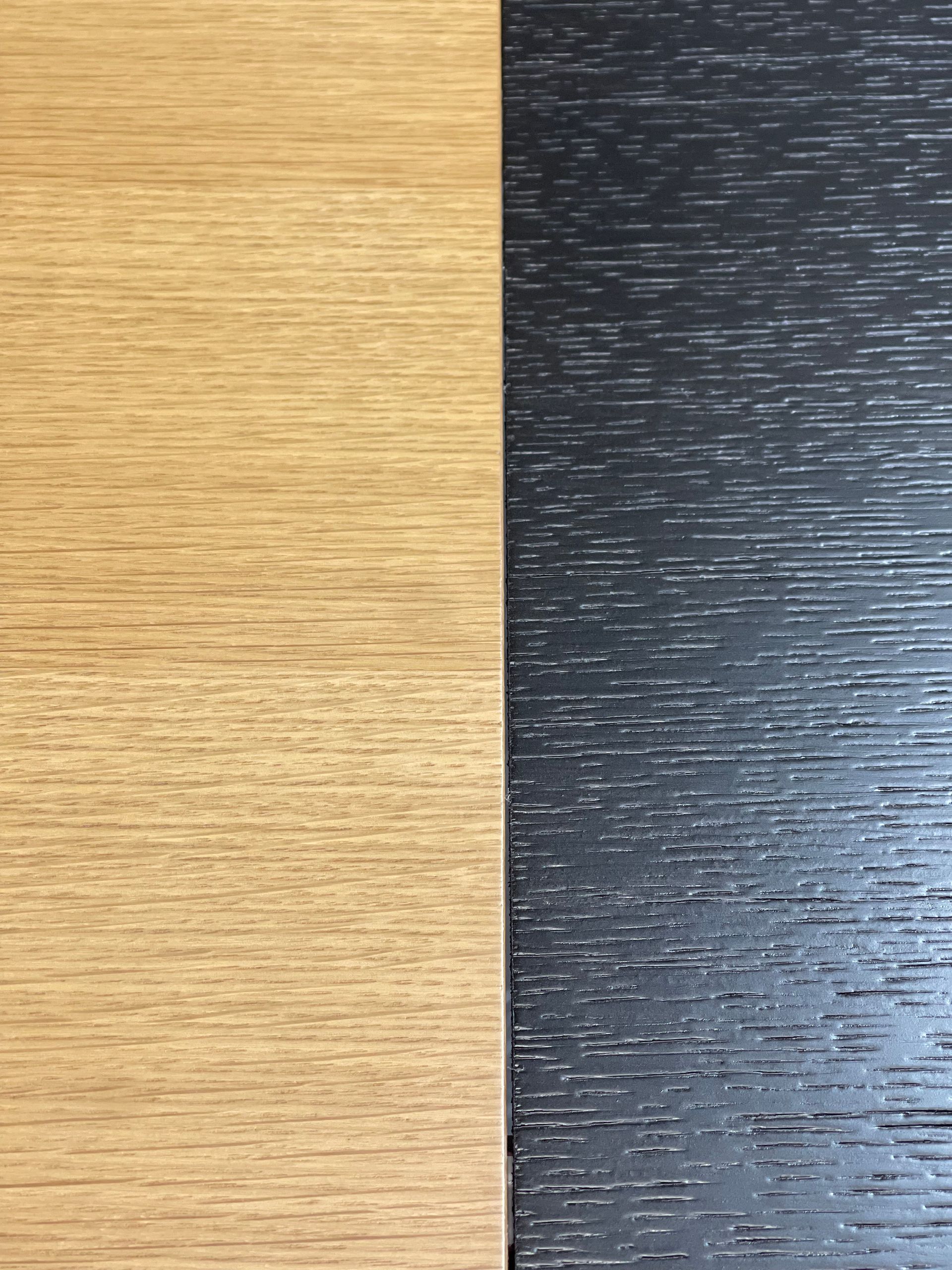
Wood stain is a coloring system composed of dyes (which penetrate and tint wood fibers) or pigments (which lodge within the pores and surface profile). While stains are designed to add color while showcasing the grain, the level of transparency and penetration depends strictly on the particle size and binder type.
Unlike paint:
- it does not create an opaque film;
- it enhances the natural wood structure;
- it requires a protective topcoat (except for hardwax oil systems).
Stain is used for:
- kitchen cabinets;
- doors;
- furniture;
- interior millwork.
Major wood stain manufacturers
Miller Paint
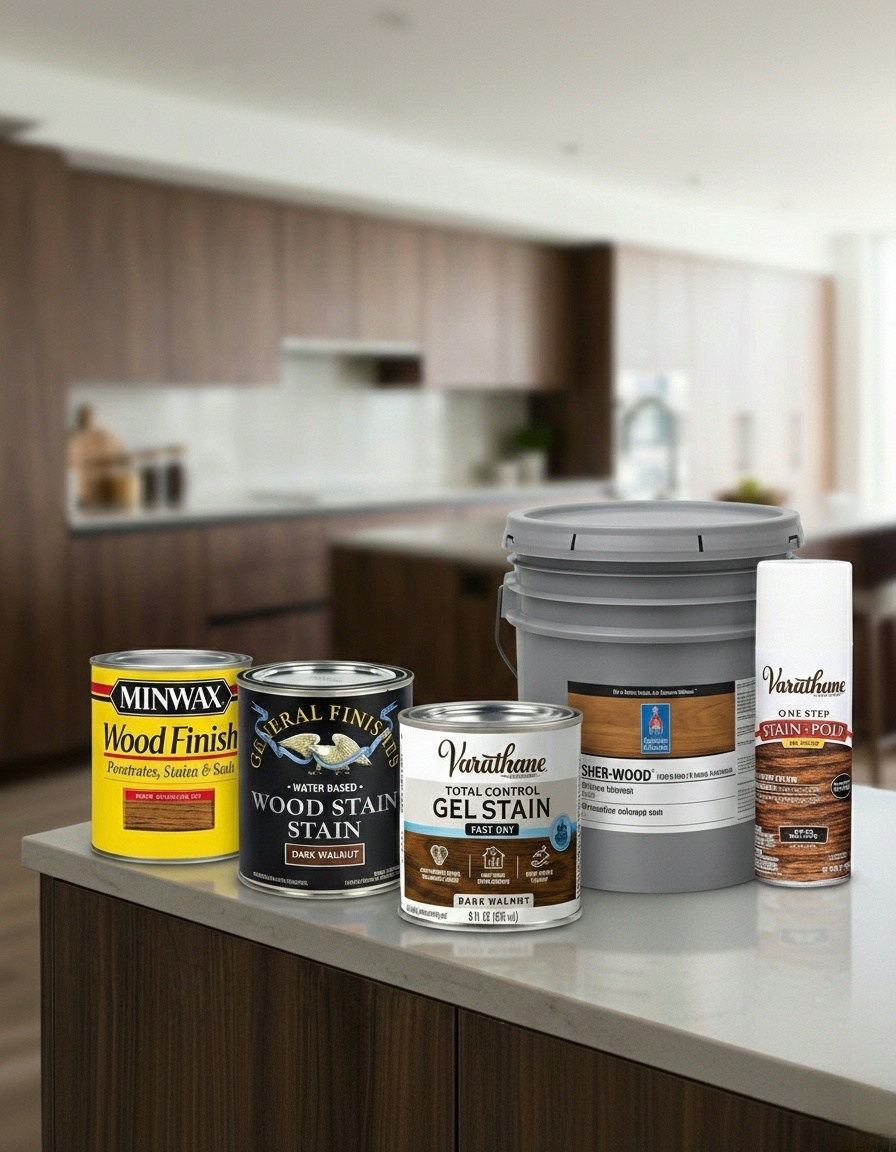
Stain brand: Miller Paint Wood Stains
Regional manufacturer (Pacific Northwest).
Sherwin-Williams
Stain brands:
- Minwax (retail / residential);
- Sher-Wood® (industrial systems).
National leader, widely used in commercial and multi-family projects.
General Finishes
Stain brand: General Finishes Wood Stains.
Popular among custom cabinet shops and in the premium segment.
Rust-Oleum
Stain brand: Varathane.
Strong retail brand.
Mohawk Finishing Products
Stain lines:
- Mohawk Wiping Stains;
- Mohawk Spray Stains;
- Mohawk Dye Stains.
Widely used in professional furniture and cabinetry manufacturing.
M.L. Campbell
Stain systems:
- M.L. Campbell Wiping Stains;
- Spray Stain Systems (industrial).
Strong presence in commercial and production cabinetry environments.
Main types of stain
Oil-Based Stain
Classic oil-based stain.
- deep penetration;
- rich color tones;
- longer working time;
- slower drying;
- higher VOC (volatile organic compounds).
Best suited for:
oak, cherry, alder, walnut.
Also works well on:
birch (with conditioner), ash, poplar (when tone leveling is needed).
Water-Based Stain
- fast drying;
- low odor;
- low VOC (volatile organic compounds);
- may raise the grain.
Used in modern production shops.
Best suited for:
maple, birch, poplar, alder.
Also used on:
oak and veneer in environmentally regulated projects.
Gel Stain
- thicker formula;
- better color control;
- reduces blotching;
- suitable for maple and birch.
Best suited for:
maple, birch, poplar (where blotching risk exists).
Also used on:
oak, veneered plywood, and previously finished surfaces during refinishing.
Dye Stain
- uses dyes instead of pigments;
- penetrates deeper;
- does not fill the pores;
- provides transparent, even color.
Often applied on veneer and in high-end furniture.
Best suited for:
maple, cherry, birch veneer.
Also used on:
walnut and exotic hardwoods for uniform deep tones.
Spray / Industrial Stain
- applied by spray;
- fast drying;
- used in factory production;
- integrated into sealer + topcoat systems.
Best suited for:
oak, maple, cherry, alder, birch veneer.
Common in mass-produced kitchen cabinetry and multi-family projects.
Stain color categories
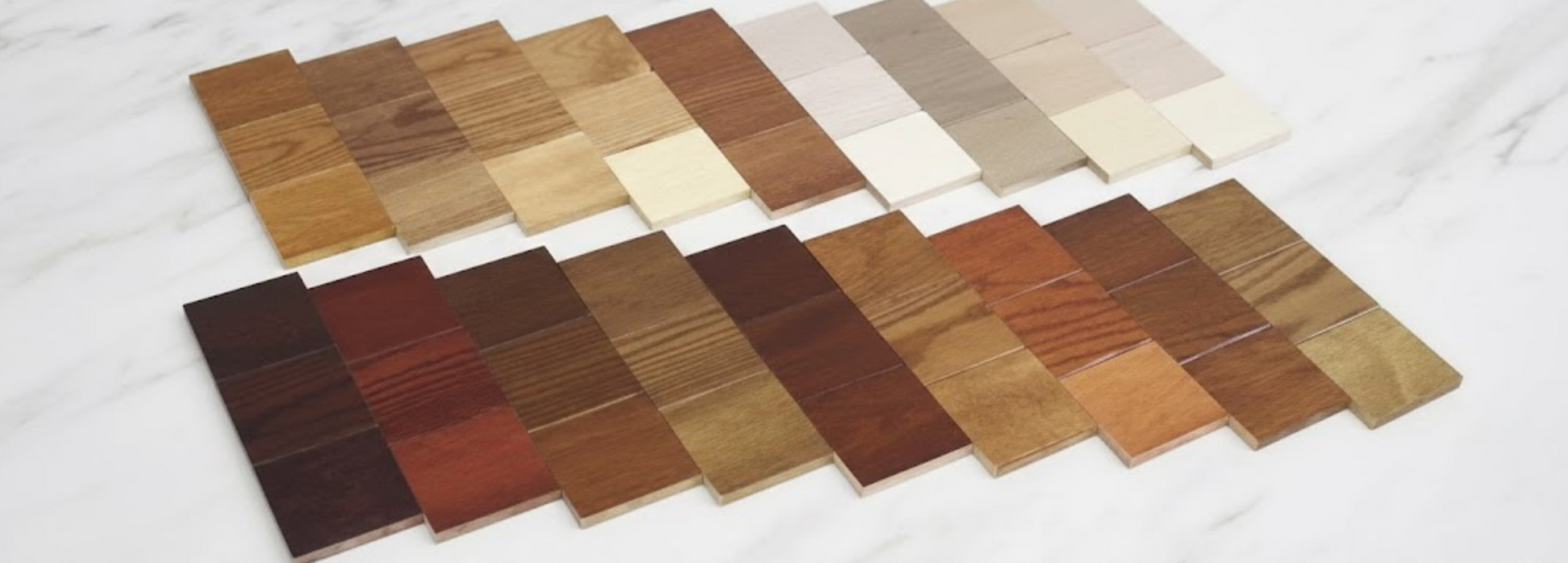
Stain is classified by wood-tone categories:
- Natural / Clear
- Golden Oak / Honey
- Walnut / Chestnut
- Dark Walnut / Espresso
- Ebony / Black
- Gray / Driftwood
- Cherry / Mahogany
The same stain appears different on oak, maple, and cherry.
Protection system: sealer + topcoat
Sealer (intermediate coat)
A clear layer that:
- seals wood pores;
- evens out absorption;
- locks in the stain;
- creates a smooth base.
It is not a final protective layer.
Without a sealer, surface smoothness may be compromised and the topcoat may absorb unevenly.
Topcoat (final protection)
Key Functions:
- Moisture & Steam Barrier: Critical for areas near sinks and stoves.
- Chemical Resistance: Protection against household cleaners, grease, and food acids (lemon juice, vinegar).
- Wear & Mar Resistance: Prevents scratches from daily use.
- Aesthetic Finish: Defines the sheen level (Matte, Satin, Semi-Gloss, or Gloss).
Main Industrial Systems:
- Conversion Varnish (CV): The North American gold standard for kitchen cabinetry. Offers superior durability and chemical resistance.
- 2K Polyurethane: High-performance European technology providing maximum elasticity and chemical protection.
- Pre-Catalyzed Lacquer: Fast-drying, excellent for general furniture, though less resistant than CV for high-moisture kitchen zones.
- Waterborne Coatings: Modern low-VOC solutions that are non-yellowing and increasingly durable with chemical hardeners.
Expert Note: For kitchen cabinet fronts, the choice of topcoat is more critical than the stain itself. Due to the aggressive environment (steam, grease, and frequent cleaning), a professional-grade system like Conversion Varnish or 2K Polyurethane is mandatory to prevent finish failure.
Proper application sequence
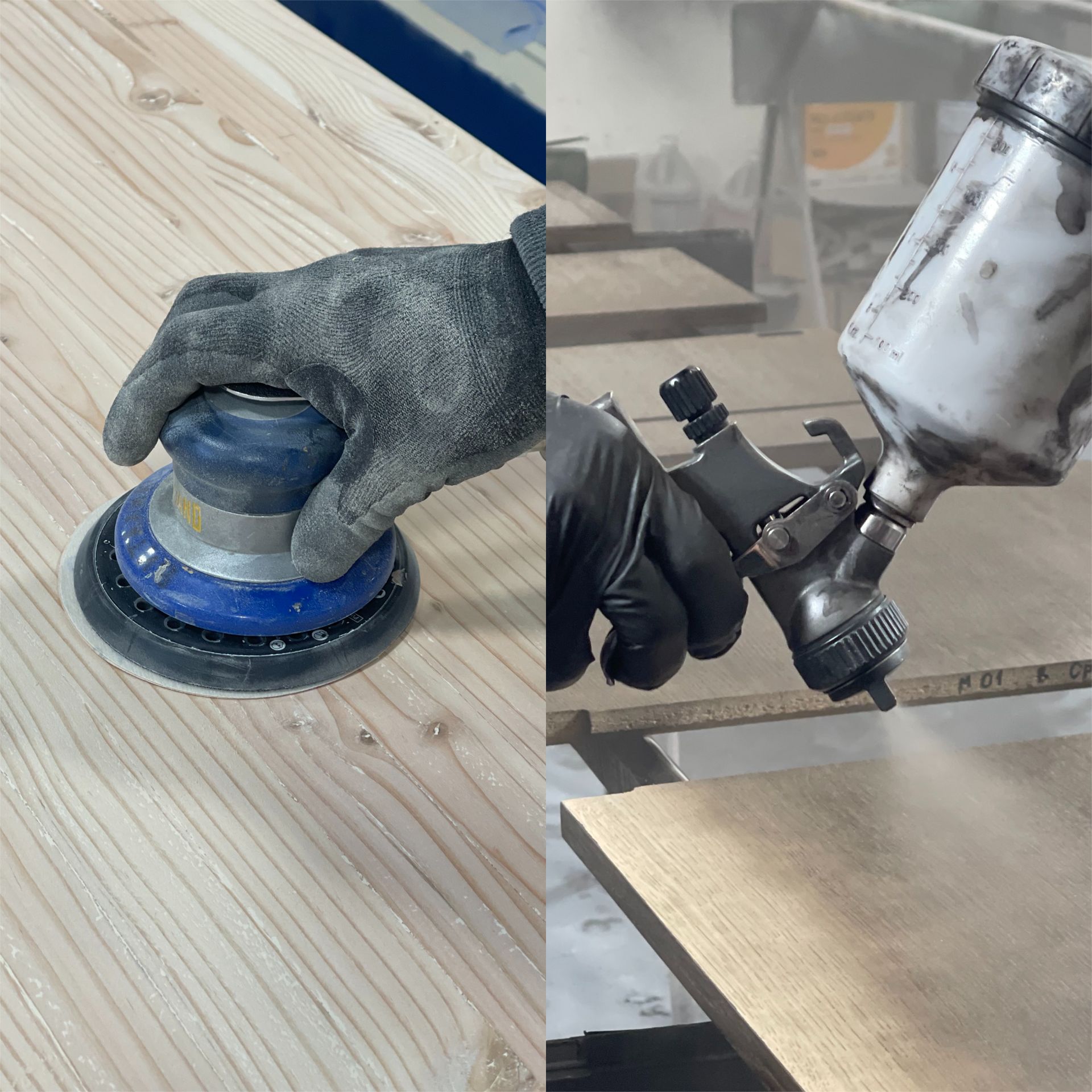
1. Sanding (to bare wood)
2. Pre-stain conditioner (if required)
3. Apply stain
4. Wipe off excess
5. Drying
6. Sealer
7. Light sanding
8. Topcoat (1–2 coats)
Do not apply stain over primer or lacquer.
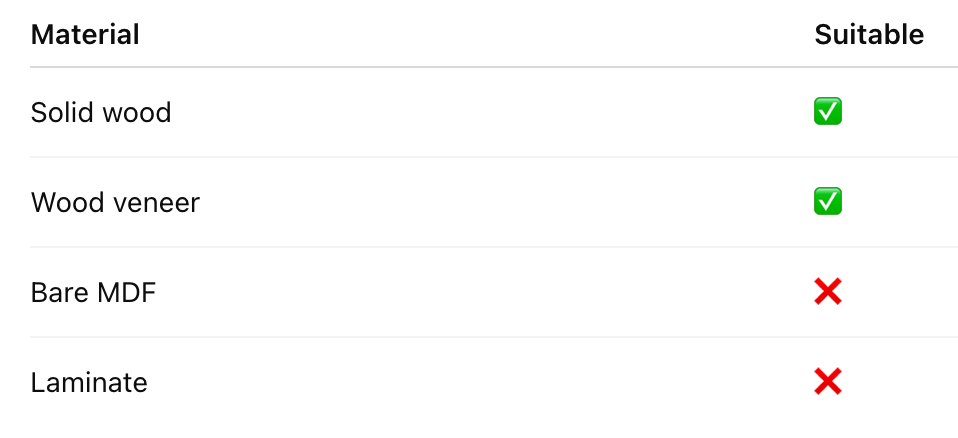
Materials suitable for stain
When to choose stain instead of paint?
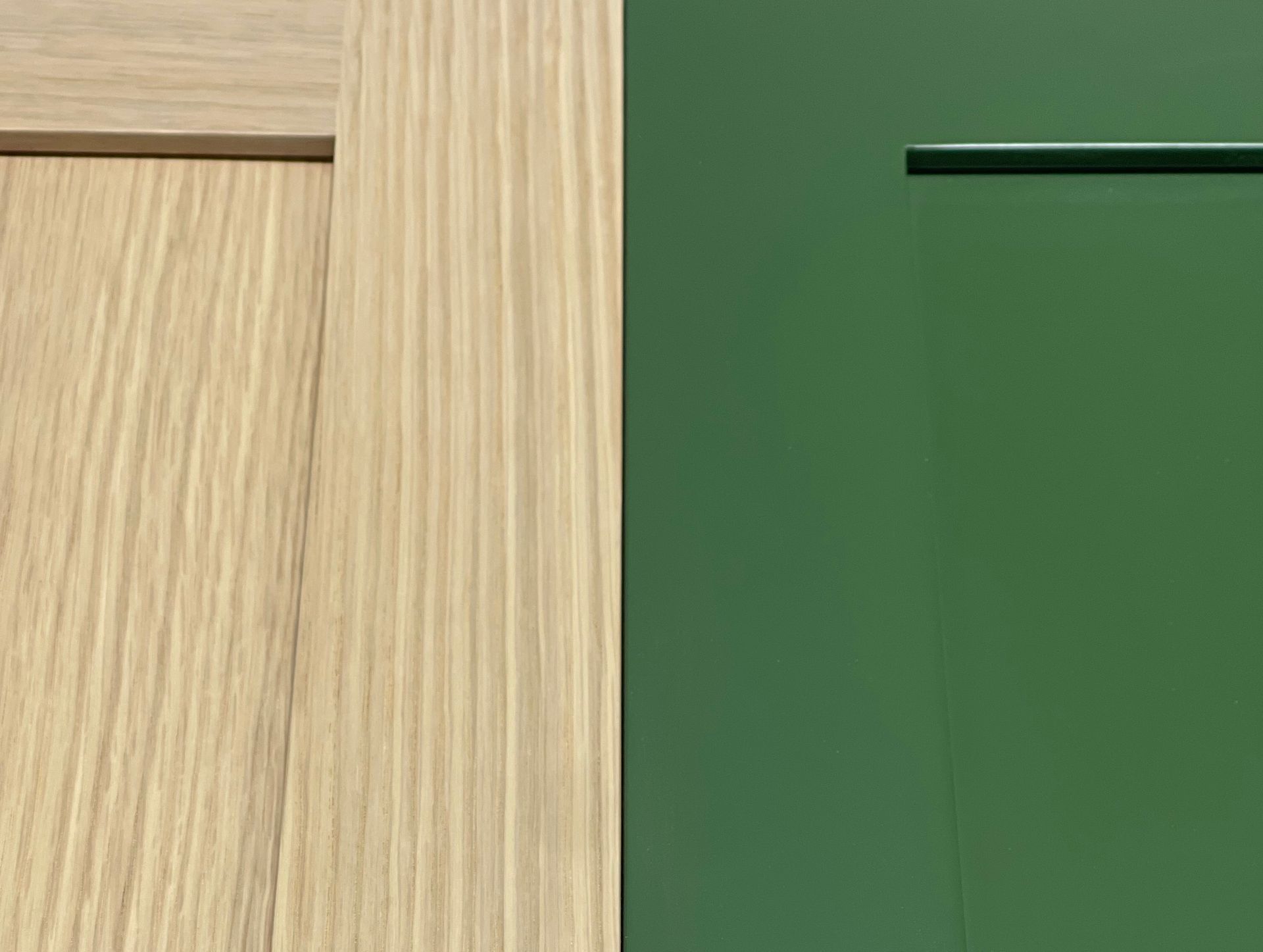
Choose stain when:
- wood grain visibility is important;
- a warm natural look is desired;
- the project is traditional or premium;
- solid wood or veneer is used.
Choose paint when:
- a completely uniform color is required;
- MDF is used;
- a modern flat look is desired.
Conclusion
Wood Stain is a wood-coloring system, not a final protective finish.
It comes in:
- Oil-based;
- Water-based;
- Gel;
- Dye;
- Industrial spray.
For kitchen cabinets, the standard system is:
Wood → Stain → Sealer → Topcoat
This technology ensures durability, moisture resistance, and a professional cabinetry finish.